Chronic-Disease Management Rotation Placement for AGPCNP Students
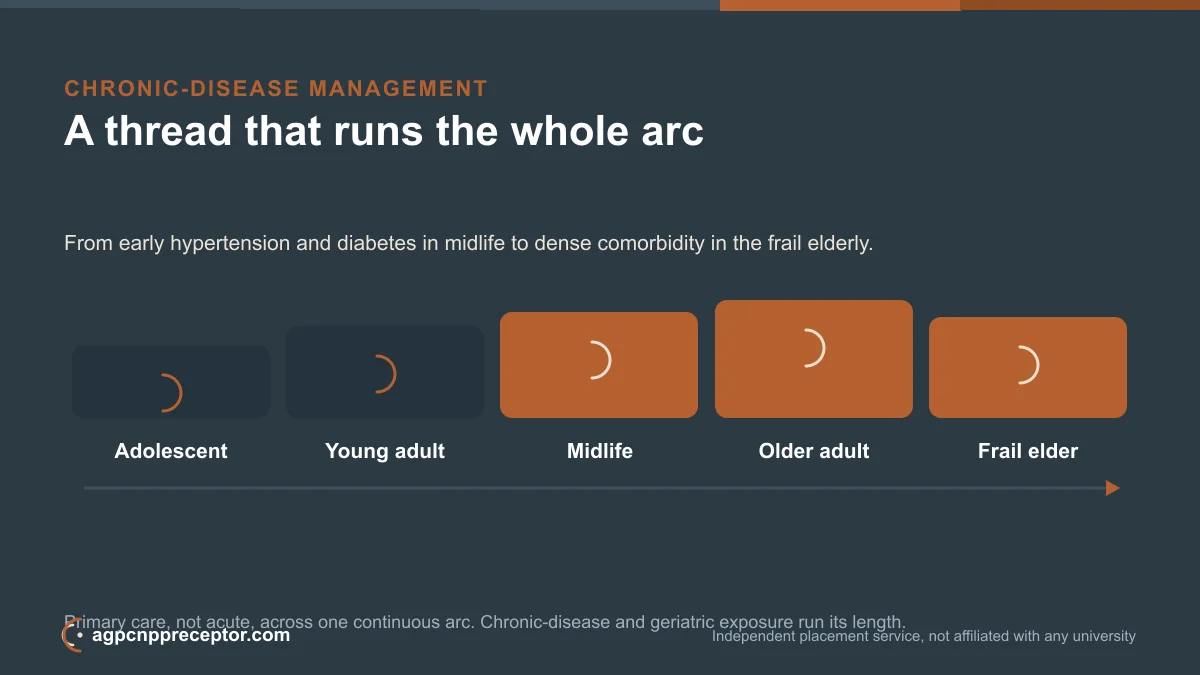
Chronic-disease management is less a single rotation than a thread that runs the whole length of the Adult-Gerontology Primary Care NP arc. From early hypertension and diabetes in midlife adults to the dense, overlapping comorbidity of the frail elderly, managing chronic conditions over time is the core skill AGPCNP practice is built on. That is why the exposure is woven into your continuity blocks rather than sitting apart, and why the right site is one with a stable panel you can actually follow. We are an independent placement service that works separately from any university. This page explains what chronic-disease exposure means for an AGPCNP and how we secure a qualified preceptor and an approved continuity site so this thread of your training is covered.
Tell us your school and city. It is free to ask, with no obligation.
What does chronic-disease management exposure mean for an AGPCNP?
Chronic-disease management is the longitudinal work of following conditions like hypertension, type 2 diabetes, hyperlipidemia, COPD, heart failure, chronic kidney disease, and osteoarthritis across many visits. It is where continuity matters most: you titrate medications, watch labs and trends, address adherence and lifestyle, and adjust the plan as the disease and the patient change over months.
Across the adult-gerontology span the same skill looks different at each end. In midlife adults you are often catching and controlling conditions early. In older adults and the frail elderly you are managing several chronic diseases at once, weighing polypharmacy against benefit, and deprescribing where the burden outweighs the gain. Seeing both ends is part of what makes the AGPCNP scope coherent.
Because this exposure runs through your continuity blocks, it is usually met inside your adult primary care and geriatrics rotations rather than as a standalone posting. The key is a site with a real chronic-disease panel and enough continuity that you follow the same patients over time.
Where do chronic-disease management hours happen?
The settings that supply genuine chronic-disease continuity are the same continuity clinics that anchor the rest of your arc:
- Family medicine and internal medicine clinics with a stable adult panel
- Adult primary care practices that carry a heavy chronic-disease caseload
- Geriatric and gerontology clinics where multimorbidity is the norm
- Long-term care and skilled-nursing settings for the frail-elder end of chronic disease
Some students also benefit from targeted outpatient specialty exposure, such as endocrinology or cardiology, to deepen management of a specific condition. Our specialty primary-care exposure guide covers when that is useful and how it fits an AGPCNP plan. Whether a given site fits is a program decision, and we source settings that supply the continuity the requirement intends.
Who can precept chronic-disease management?
Because this exposure lives inside your continuity blocks, the preceptor is generally the same kind of provider who supervises your adult primary care or geriatrics rotation, subject to your school's rules:
- An Adult-Gerontology Primary Care NP (A-GNP or AGPCNP-BC)
- A Family Nurse Practitioner with a substantial chronic-disease panel
- A physician (MD or DO) in family medicine, internal medicine, or geriatrics
The practical requirement is a panel with enough chronic-disease volume and continuity that you can follow conditions over time rather than see them once. We verify each preceptor against your program's rules and confirm the panel before you commit. See our preceptor requirements guide for details.
How do we place your chronic-disease continuity?
Since chronic-disease management is usually met within your primary care and geriatrics blocks, our job is to make sure the sites we secure for those rotations carry a real chronic-disease panel. You tell us your school, your city, and the hours you still need, and we source continuity clinics that can actually give you the longitudinal caseload the exposure requires.
- Panel depth. We target sites with enough chronic-disease volume and continuity that you follow patients over time.
- Both ends of the arc. We plan for early-disease exposure in adults and multimorbidity in older and frail-elder patients.
- Eligibility verified. We confirm each preceptor against your program's rules before you commit.
- Approval-ready. We shepherd the affiliation agreement the site and your program need.
Final approval of any site or preceptor rests with your university, not with us, and we do not act for any school. We do not guarantee hours, grades, certification, or outcomes, and nothing here is a tuition refund. See how it works, or start on the find a preceptor page.
Good to know
Is chronic-disease management a separate AGPCNP rotation?
Usually it is woven into your continuity blocks rather than posted separately. Managing conditions like hypertension, diabetes, and heart failure over time is the core skill of AGPCNP practice, so it lives inside your adult primary care and geriatrics rotations. Some students add targeted outpatient specialty exposure to deepen a specific area.
Where do AGPCNP chronic-disease hours take place?
In continuity settings with a real chronic-disease panel: family or internal medicine clinics, adult primary care practices, geriatric clinics, and long-term-care settings for the frail-elder end. The key is enough continuity that you follow the same patients over time. Your program approves the site.
How many chronic-disease hours does an AGPCNP need?
There is no separate national chronic-disease hour count. Total AGPCNP direct patient care hours run from roughly 500 to 750 or more, anchored to the 2022 NTF minimum of 750 hours per NP track and the older 500-hour certification-eligibility floor. Chronic-disease management is met within your continuity blocks. Confirm your program's structure with your school.
Are you affiliated with my university?
No. We are an independent placement service that works separately from any university or certification body. We help AGPCNP students at any school secure a qualified preceptor and an approved continuity site; final approval always rests with the university.
Secure both ends of the arc, not just one
Tell us your school, your city, and the hours you still need across the continuum. We will come back with a plan that reaches from continuity primary care to genuine frail-elder exposure, and a realistic path to placed.